
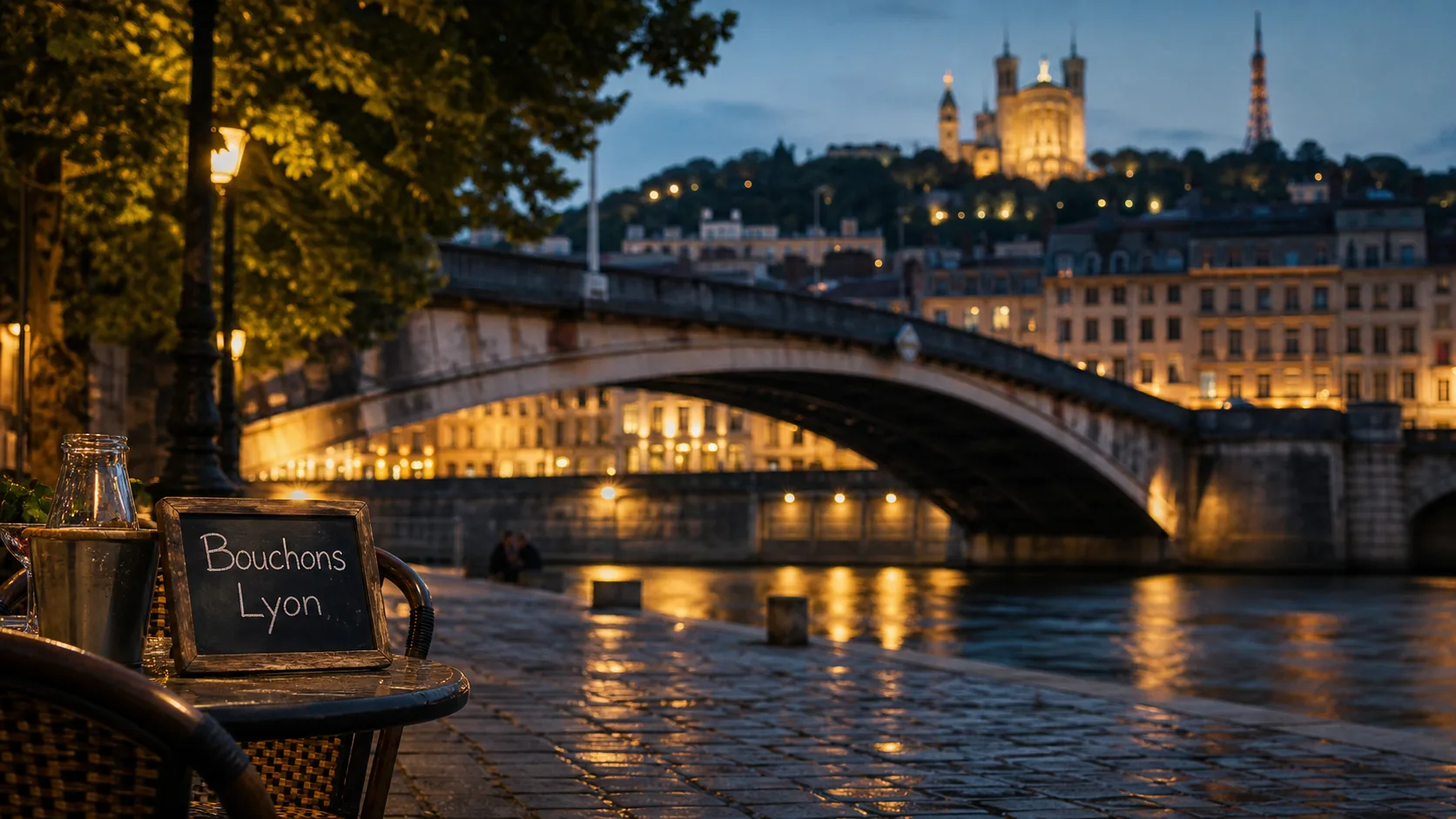
Lyon is best known for its food, its UNESCO-listed old town, and its location at the meeting point of the Rhône and Saône rivers. It is France’s third-largest city, and the Lyon metropolitan area is the second largest in the country, yet the city often feels more intimate than Paris and less obvious than Provence or Marseille. That balance is part of its appeal: Lyon has the scale of a major French city and a strong local identity.
If you are deciding whether to add Lyon to a France itinerary, think of a city where dinner, architecture, riverside walks, markets, and history support one another. Lyon is not a place you visit for a single monument. It is a city that shows a very specific French way of living through its streets, tables, and riverbanks.
Lyon in one glance: the city’s main claims to fame
Lyon has a layered identity. It is known as a food capital, a historic trading city, a river city, a Renaissance city, and a place closely tied to silk, markets, and traditional restaurants called bouchons. Its location also matters: Lyon sits southeast of Paris, north of Marseille, and southwest of Geneva, which makes it a natural crossroads between northern France, the Alps, Provence, and Switzerland.
| What Lyon is known for | Where to experience it | Why it matters |
|---|---|---|
| Gastronomy | Bouchons, Les Halles de Lyon Paul Bocuse, local markets | Lyon is widely described as France’s gastronomic capital |
| Renaissance heritage | Vieux Lyon, cobbled streets, courtyards, cathedral area | Vieux Lyon is a UNESCO World Heritage Site |
| Two rivers | Rhône, Saône, Presqu’île, Confluence District | The city is shaped by the confluence of the Rhône and Saône |
| Landmarks and views | Fourvière Hill, Basilica of Notre-Dame de Fourvière, Place des Terreaux | They give Lyon its skyline and wide city views |
| Silk and Resistance history | Historic passages, Croix-Rousse associations, museums | They connect Lyon to trade, labor, secrecy, and modern French history |
One way to understand Lyon is to look for its core rather than for a checklist. In Paris, the center feels monumental; in Lyon, the center is more like a sample of the city itself. At river level, you see trade routes, bridges, and markets. In Vieux Lyon, you find Renaissance stone, inner courtyards, and narrow passageways. Higher up, Fourvière opens a long view over the urban basin. Then food ties the layers together: sausages, sauces, pastries, wine, and market counters show how geography becomes appetite. That is why Lyon feels coherent even when you move between very different districts.
Why Lyon is called France’s gastronomic capital
Food is the first answer most people give when asked what Lyon is famous for. The city’s reputation comes from everyday dining as much as from culinary prestige: bouchons, markets, bakeries, cafés, charcuterie, cheeses, and a culture of sitting down for a generous meal. Lyonnaise cuisine is not delicate in the abstract sense. It is hearty, direct, regional, and proud of its ingredients.
Bouchons and Lyonnaise cuisine
A bouchon is a traditional Lyon restaurant serving local fare in a convivial setting. Typical dishes linked to this style include quenelles de brochet with Nantua sauce, andouillette, tripe, tête de veau, Lyon sausage en croûte, and other rich, rustic plates. For some travelers, those dishes are an adventure. For others, the real pleasure is the atmosphere: checked tablecloths, close tables, house wine, and the feeling that the meal belongs to the city’s social life.
This is also where Lyon differs from destinations known mainly for scenery. In Lyon, eating is not a break from sightseeing; it is part of it. A lunch in a bouchon can tell you as much about the city as a museum visit because it reflects trade, working-class appetite, regional terroir, and local pride.
Les Halles de Lyon Paul Bocuse and market culture
Les Halles de Lyon Paul Bocuse is one of the city’s essential food landmarks. Named after Paul Bocuse, the chef closely associated with Lyon’s modern culinary reputation, this indoor market gathers vendors selling seafood, cheeses, saucissons, pastries, breads, chocolates, prepared dishes, and wine-friendly specialties. It is the kind of place where visitors can graze, shop, or simply understand the city through its counters.
The market’s reputation is not only local: Les Halles de Lyon Paul Bocuse was voted the third-best market in the world by the Food & Wine Global Tastemakers Awards for 2026. Even if you do not plan a full restaurant itinerary, a visit here helps explain why Lyon’s food culture is treated with such seriousness.
Vieux Lyon, Renaissance streets and hidden courtyards
Vieux Lyon is one of the strongest reasons the city is known beyond food. This historic district is a UNESCO World Heritage Site and is often described as one of Europe’s best-preserved Renaissance-era old towns. Its appeal is immediate: cobbled streets, warm-toned façades, old shopfronts, churches, and narrow lanes that invite slow wandering rather than hurried sightseeing.
A preserved old town with 15th- and 16th-century character
Many buildings in Vieux Lyon date from the 15th and 16th centuries, when the city was a major commercial and cultural hub. The district’s architecture reflects that wealth: arcaded courtyards, spiral staircases, covered galleries, and façades shaped by Italian Renaissance influence. The Gothic cathedral, often referred to as Lyon Cathedral or Cathédrale Saint-Jean-Baptiste, anchors the area and gives visitors an easy point of orientation.
The pleasure of Vieux Lyon is not limited to grand monuments. Much of its charm comes from small-scale discovery: a doorway left open, a courtyard glimpsed between buildings, a stone staircase rising out of sight, or a quiet street that suddenly opens toward a square. That is why the district works especially well on foot.
Traboules, silk routes and the sense of secrecy
Lyon is also associated with hidden passageways known as traboules. These passages are closely linked in the traveler’s imagination to the city’s silk history and to later stories of secrecy, including the French Resistance. Even when a visitor only sees a few of them, they change the way the city feels: Lyon becomes not just a collection of façades, but a place with interior routes and concealed circulation.
The silk trade is central to Lyon’s historical identity. It connects the city to craftsmanship, merchants, workshops, and neighborhoods shaped by production as much as by beauty. This heritage gives Lyon a depth that is easy to miss if you only come for dinner.
The Rhône, the Saône and the districts that define Lyon
Lyon’s geography is one of its clearest signatures. The city sits at the confluence of the Rhône and Saône rivers, and that meeting of waters shapes how visitors move through it. The Presqu’île, literally the “peninsula” between the two rivers, is one of the main central areas for shopping, squares, cafés, museums, and elegant streets.
Presqu’île, squares and city life
The Presqu’île gives Lyon much of its urban rhythm. It includes major public spaces such as Place des Terreaux and Place des Jacobins, along with shopping streets, restaurants, and classical architecture. Place des Terreaux is particularly associated with the Fontaine Bartholdi, a dramatic fountain that adds energy to the square.
Bridges also matter in Lyon. Crossing the Saône toward Vieux Lyon or the Rhône toward other districts makes the city feel readable. Pont Lafayette, riverbanks, and waterside promenades help visitors connect neighborhoods without treating sightseeing as a series of disconnected stops.
Confluence, La Part-Dieu and the modern city
Lyon is not only an old town and a food market. La Part-Dieu is a major business and transport area, while the Confluence District shows a more contemporary face of the city where the rivers meet. This contrast is part of Lyon’s appeal: Renaissance lanes, traditional bouchons, modern architecture, and transport hubs all exist within the same urban story.
For travelers, that means Lyon can work for different styles of trip. You can spend a romantic weekend in Vieux Lyon and around the Saône, build a food-focused stay around markets and bouchons, or use the city as a polished stop between Paris, Marseille, Geneva, and the Alps.
Fourvière, landmarks and why Lyon feels underrated
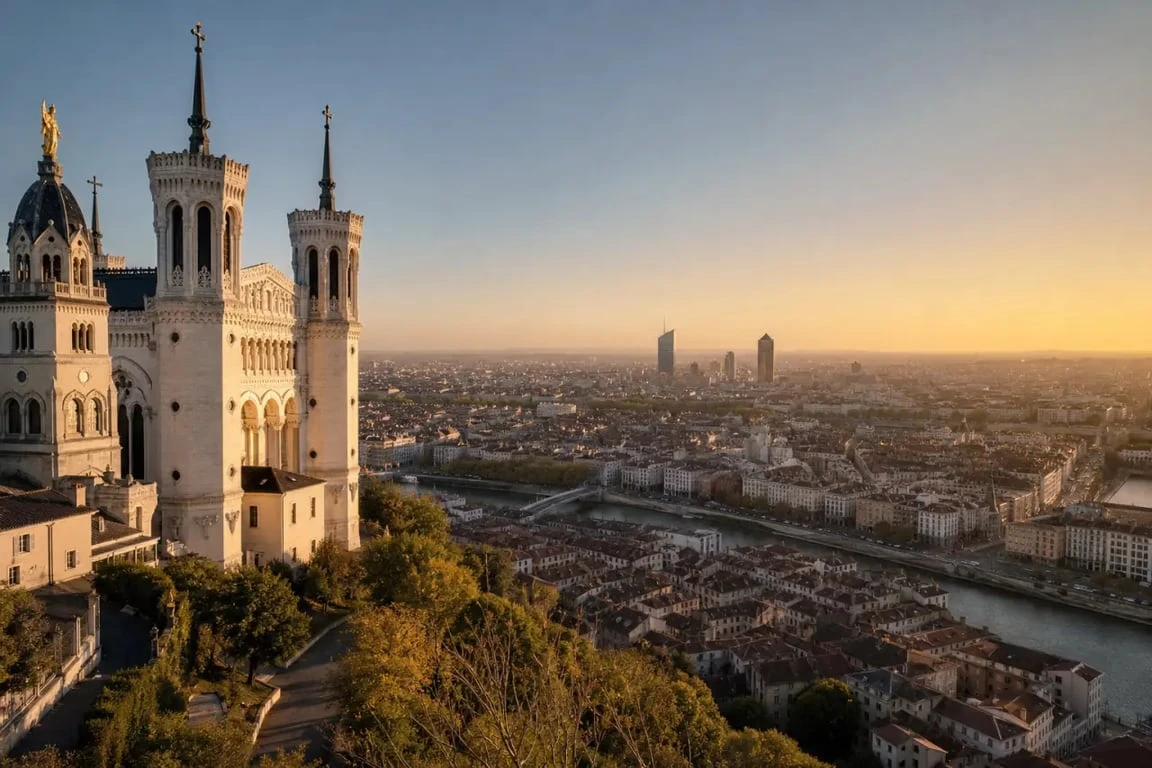
Fourvière Hill is the classic place to understand Lyon visually. From above, the city’s pattern becomes clear: rivers, bridges, old districts, dense neighborhoods, and distant horizons. The Basilica of Notre-Dame de Fourvière is one of Lyon’s defining landmarks, both for its position and for the way it watches over the city.
Views, parks, murals and public spaces
Beyond Fourvière, Lyon is known for a set of landmarks and everyday places that reward wandering. Parc de la Tête d’Or offers green space on a generous scale. Building murals add color and surprise to ordinary streets. Public squares create pauses between shopping, eating, and walking. The city is not branded as heavily as Paris, but it is rich in scenes that feel lived-in rather than staged.
This is also why Lyon is often described as underrated. Paris has the icons, Provence has the light and villages, Marseille has the Mediterranean edge; Lyon has a quieter but very complete identity. It offers serious food, major history, river scenery, walkable districts, and enough grandeur to feel important without overwhelming the visitor.
Is Lyon worth visiting?
Yes, especially if you want a French city that combines culture and daily life. Lyon is ideal for food lovers, architecture fans, history-minded travelers, and anyone who enjoys exploring neighborhoods on foot. It is large enough to matter, yet compact enough for a short stay focused on Vieux Lyon, Fourvière, the Presqu’île, Les Halles de Lyon Paul Bocuse, and a traditional bouchon meal.
In the end, Lyon is known for more than one thing because its strongest experiences overlap. The rivers explain the trade. The trade explains the wealth. The wealth explains the Renaissance fabric. The working city explains the bouchons. The markets explain the culinary fame. Put together, they make Lyon one of France’s most rewarding cities to understand, not just to visit.

- What Is Lyon, France Known For? Food, Renaissance Streets, and Two Rivers - 12 juillet 2026
- Agastache in Lyon: bistronomic cooking, Michelin reassurance, and a short wine list - 12 juillet 2026
- Team building 20 personnes : le format idéal pour créer 4 sous-équipes et jouer ensemble - 11 juillet 2026